Cultural Appreciation
The below was published in Nikkei Asia here in December 2021.
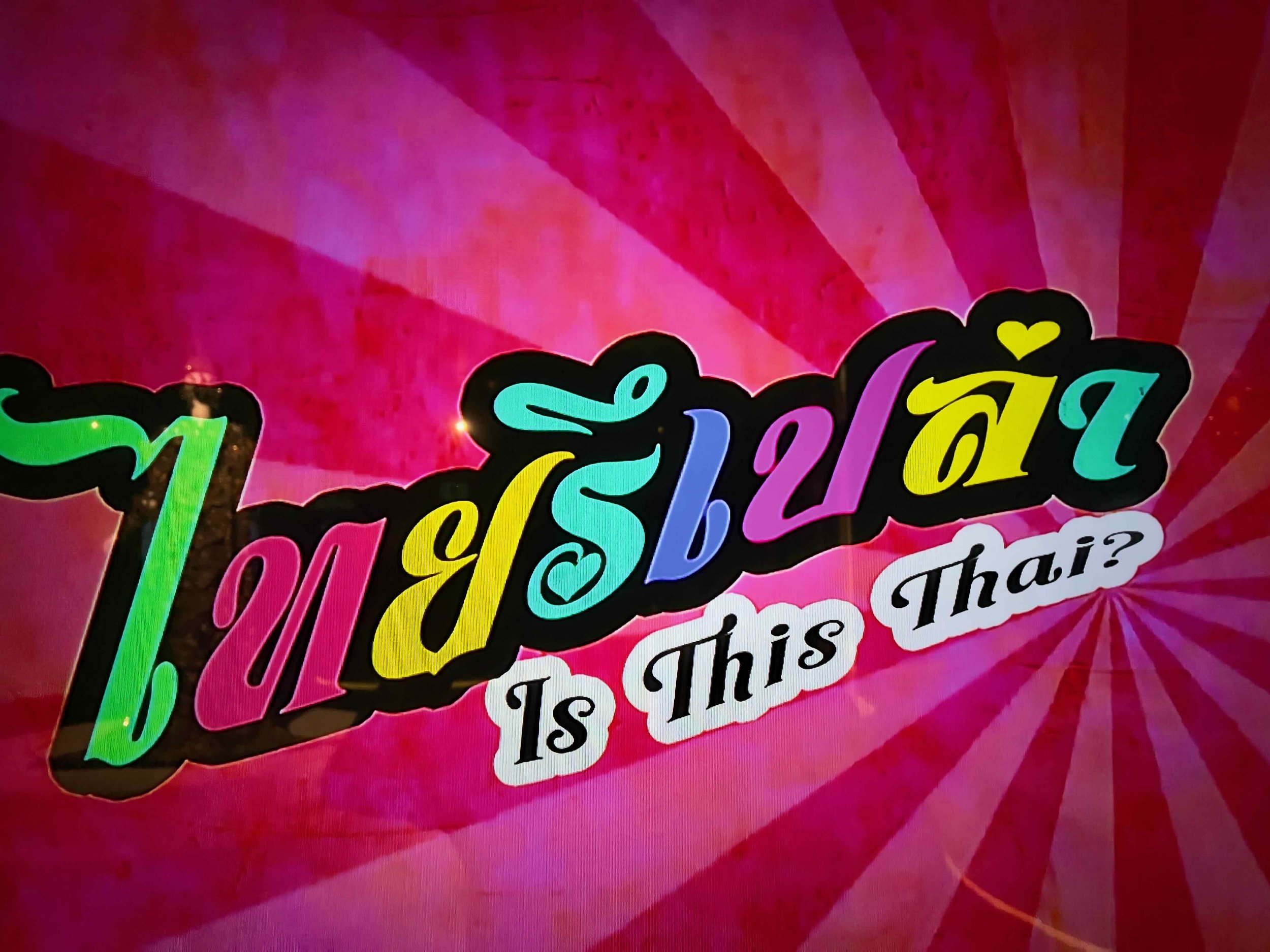
The giant electronic screen screaming, “But are they really Thai?” in front of an exhibition of some of the country’s most recognizable cultural icons was not quite what I had expected to see on entering Bangkok's Museum Siam. National museums usually focus on emphasizing, rather than questioning, their country’s uniqueness, so this definitely warranted a closer look.
The displays inside certainly would give ardent nationalists pause for thought. They kicked off with pad thai, one of the country's best-known dishes, a delicious concoction of sautéed noodles with a salty-sugary kick, a culinary icon in a country that’s obsessed with food. But the panel pointed out that it had actually originated as a Chinese import that was given a few tweaks by Thailand's military government in the 1930s, removing the pricey pork and adding egg and fish sauce for example. It was then marketed as a national dish with the goal of getting people to switch away from eating rice during a time of shortages.
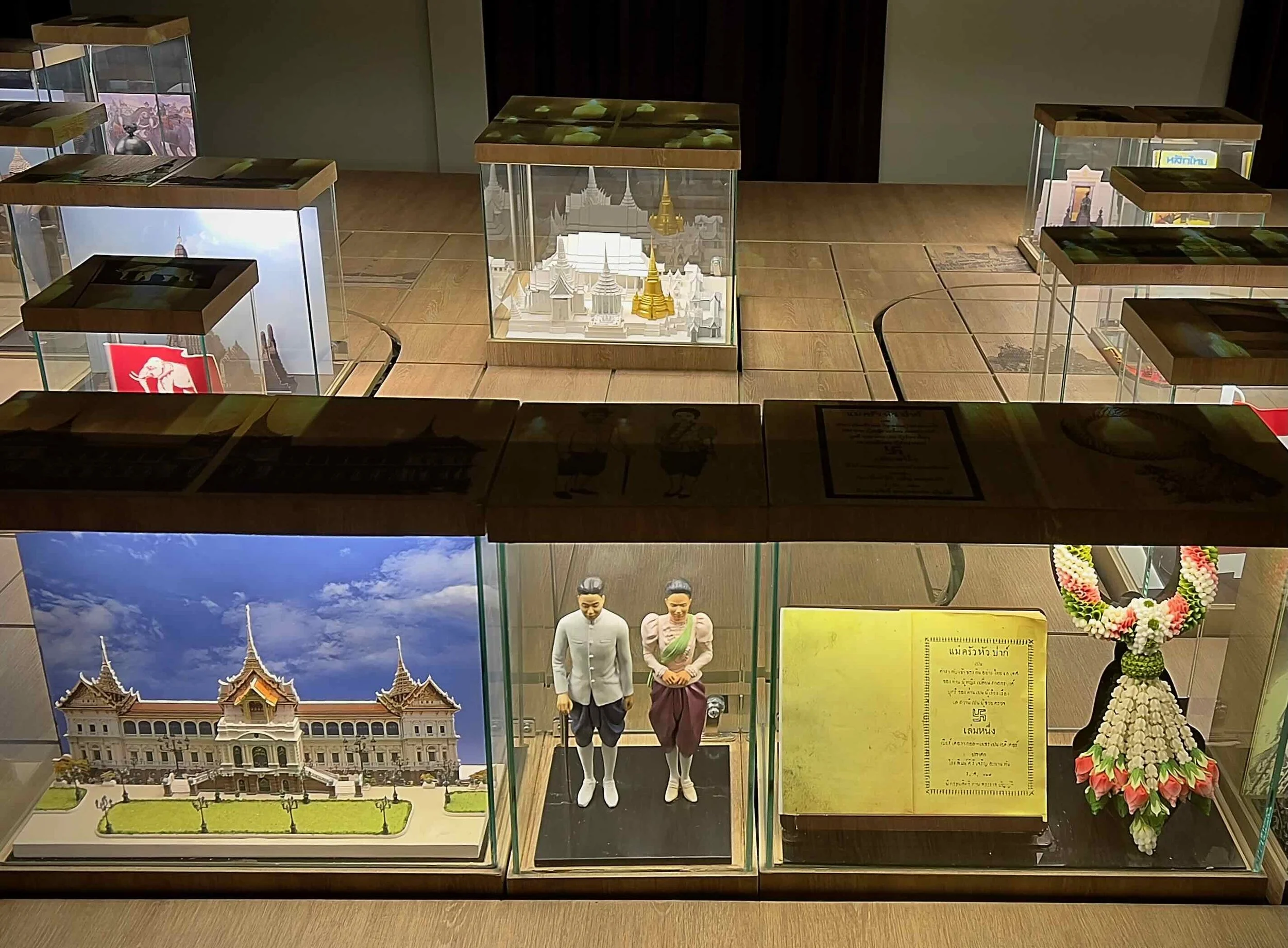
After digesting that, it was on to Thai massage, a vigorous kneading, twisting and hammering of the body that aims to revitalize the energy meridians. It's a therapy proudly celebrated in Thai culture, and a world away from the oily rubdown that passes for massage in most of the rest of the world. But, as the museum now explained to me, its roots actually lay in a system invented by a doctor in India a couple of millennia ago, that was imported into Thailand along with Buddhism.
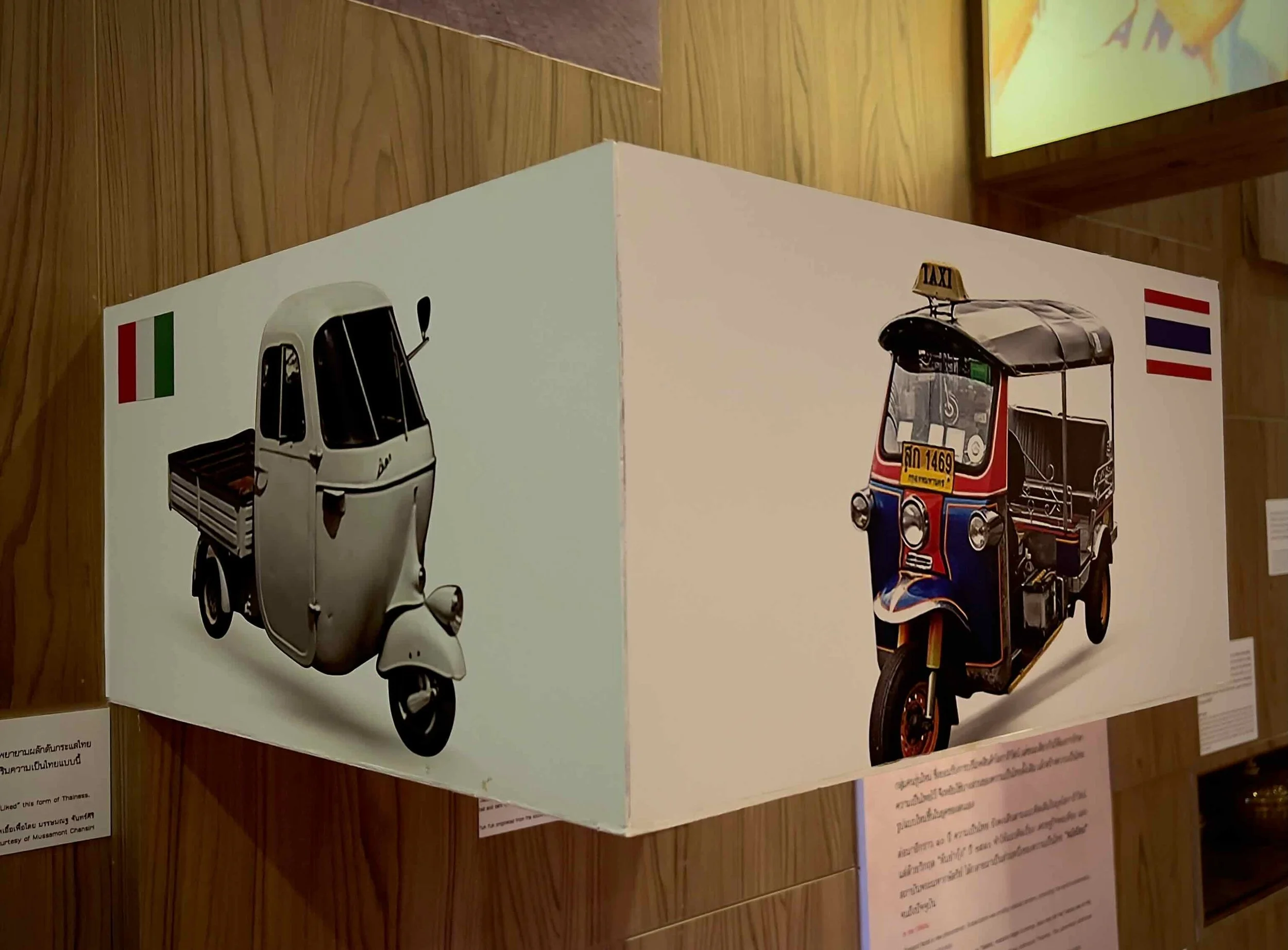
Next in line were tuk-tuks. I had always considered these a quintessentially Thai mode of transport, doubtless invented on the busy streets of Bangkok. But it turned out that this three-wheeled love child of a motorcycle and a pickup truck was actually brought over to Thailand from Japan in the 1960s, where it had been known as the Daihatsu Midget. The Japanese themselves had in turn pinched it from the Italians in the 1950s, where it was first conceived as the Piaggio Ape shortly after World War II.
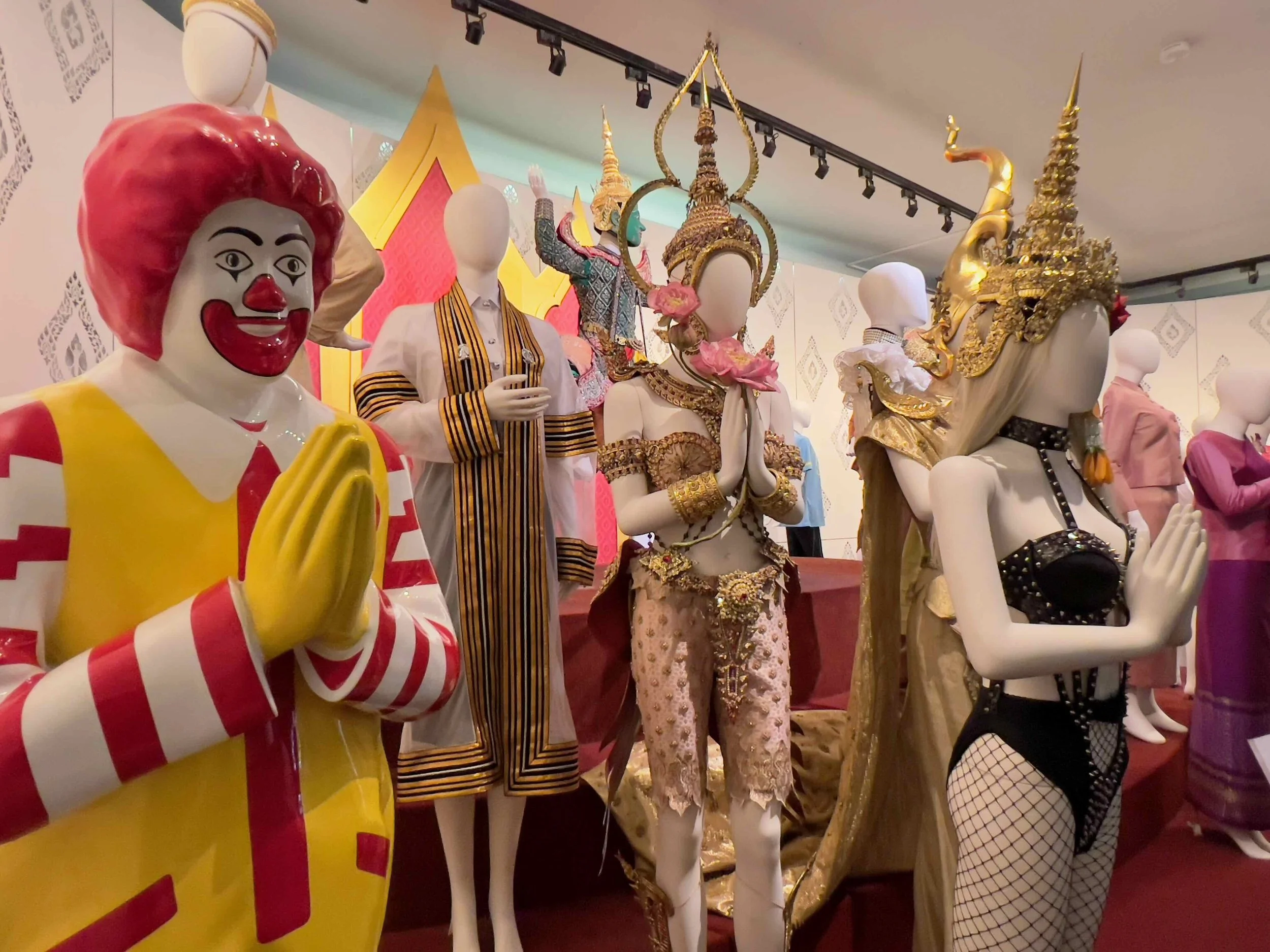
Thai traditional dress didn't escape scrutiny either. I discovered that the first Thai lace blouses, today eponymous with traditional formal wear, were introduced in the early 1900s after King Rama V visited Europe and took a liking to the style favored by Victorian ladies. Likewise, gentlemen's chong kraben trousers and traditional jackets were adapted from a design that originally came from India.
And on it went. I learned about overseas influences in the design of the national flag (the blue band representing the monarchy was apparently first proposed by a foreigner), that the mythical Garuda bird on the royal seal originated in India, and that the Tourism Authority of Thailand's logo was designed by an American. All of this was explained to me within the confines of the beautiful old museum building, formerly the Ministry of Commerce, that had been designed by an Italian.
The question was whether such foreign roots made any of the cultural icons on show somehow less Thai? I had to say no as, in each case, a unique customisation and seasoning with local magic had taken place - "we always added a little spice" as the museum curator put it - which resulted in fresh new creations that were very distinctly local.
What was not unique though, was the practice of undertaking such cultural borrowing in the first place, an inevitable result of our species’ incessant movement and interaction over the centuries. The same kind of exhibition could be staged anywhere in the world and would likewise reveal the local culture as a magpie's nest, stuffed full of trinkets from far and wide.
Take the UK for example, where I was brought up. The local language is a mishmash drawn from all over Europe and written in a script imported from Italy. The national dish (if one can call it that) of fish and chips was brought over from the Netherlands by Sephardic Jewish immigrants. And as for the British royal family, let's just recall that back in the day they changed their name from "Saxe-Coburg" to "Windsor" and leave it at that.
Other countries could do well to emulate the Museum Siam's openness in celebrating the eclectic origins of their national treasures. There is a humbling reminder here that, to find a truly indigenous, homegrown culture that’s devoid of any foreign influence, you would have to return to the beginning of human history. And, even then, I have a sneaking suspicion that you’d discover the first Homo sapiens swiped half of their best cave art from the Neanderthals.