Happy Beginnings
This story was published in Nikkei Asia here.
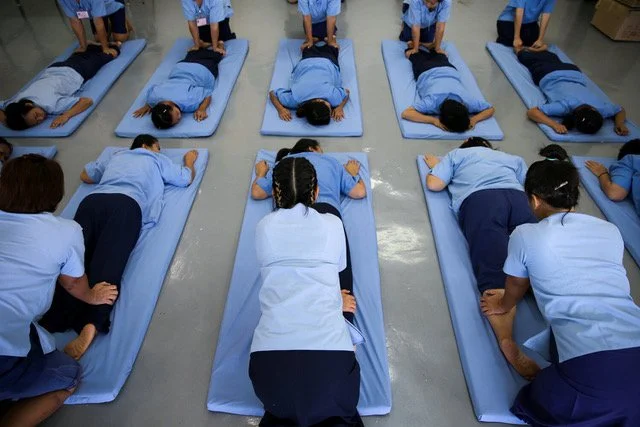
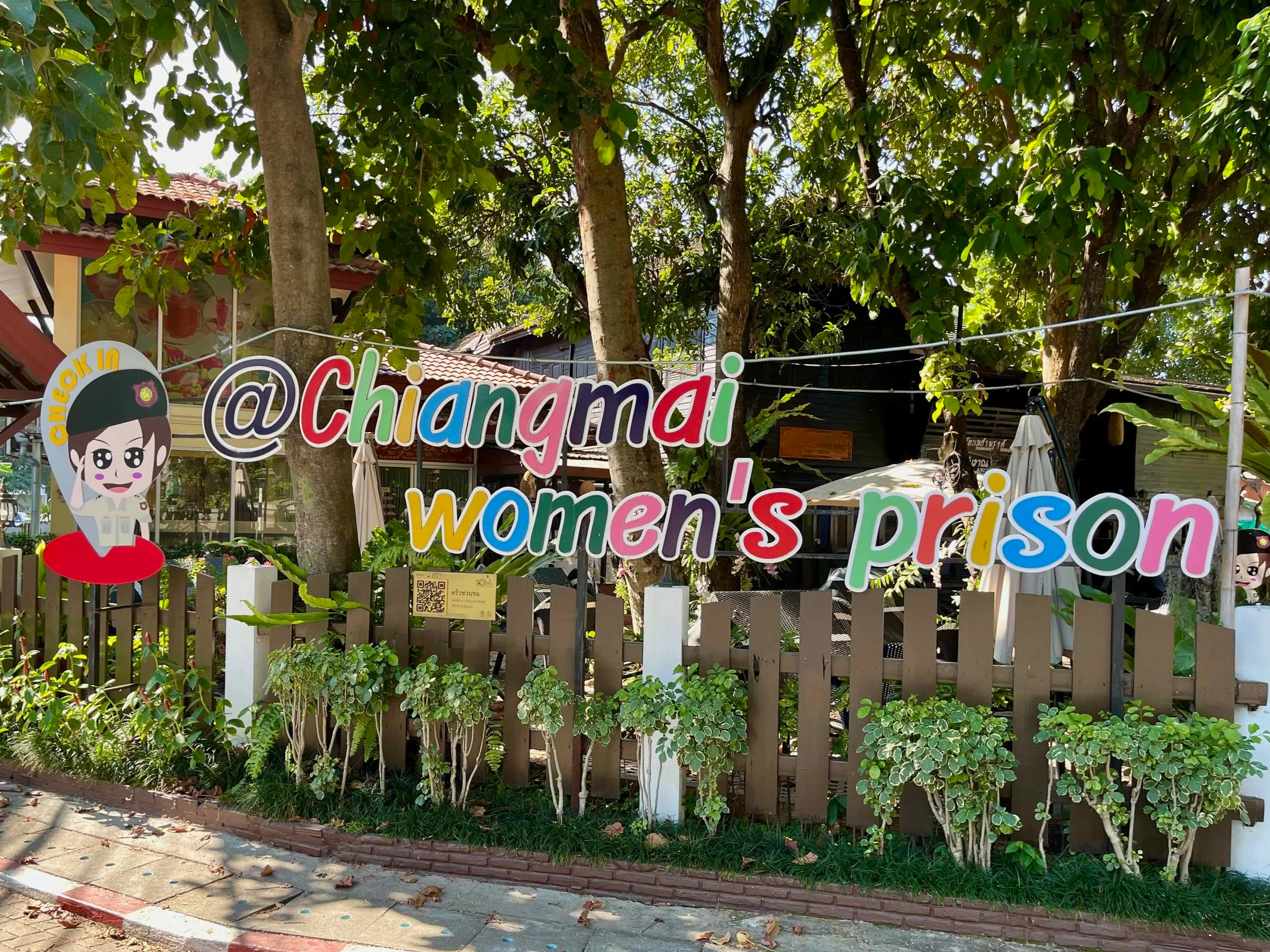
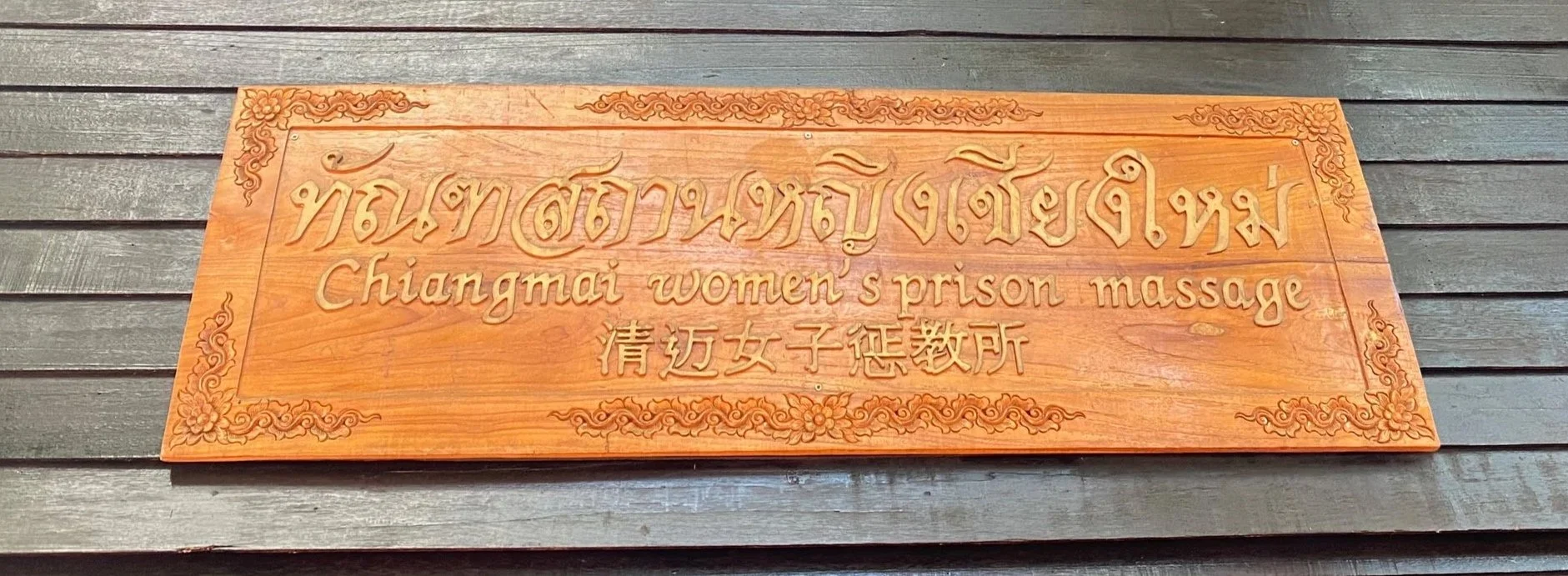
As the prison inmate clamped her thickly tattooed arms firmly around my neck from behind, I realised that I now couldn’t move an inch and started to question my choice of afternoon recreational activity. We were in an old wooden building just around the corner from the women's jail in the northern Thai city of Chiang Mai, into which I had been enticed by a sign proposing "Prison Massage." Pimchan, the inmate who now had a hold of me, was enrolled in a program that taught traditional Thai massage to serving convicts, giving them a new career opportunity when their sentences ended. Having already completed some 500 hours of study, she was now allowed out on day release to practice on paying customers like myself. Despite the rigorous requirements of the programme, it was apparently in extremely high demand by inmates, as massage offered one of very few viable future career options when you were poor, female, lacking in educational qualifications and saddled with a rap sheet.
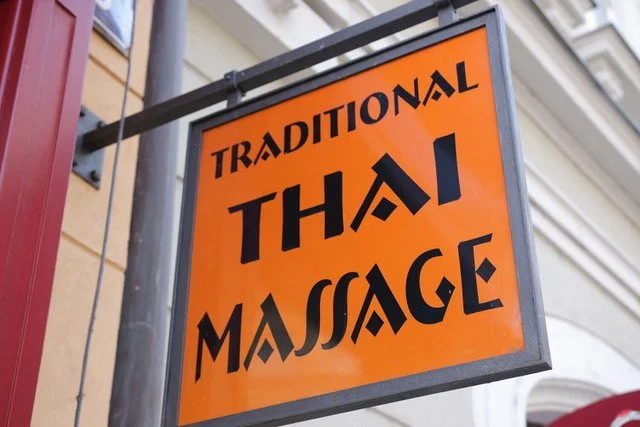
Some farang, or foreigners, tend to assume that a massage in Thailand will always involve a sexual component, a belief that can either lead them to make a beeline for the nearest parlour as soon as their plane lands or else to avoid all such establishments like the plague for the duration of their stay. But there is actually an easy way to distinguish a genuine, massage-only establishment from one of its seedier cousins - on the sign outside the word massage will be preceded by “Traditional” or “Thai” (and definitely not “oily” or “soapy”) and there won’t be any young women sitting under it touting for business.
Nevertheless, a real Thai massage is still not for the faint-hearted. Mine had started promisingly enough, with Pimchan bowing and then asking for permission to touch my “sacred body”. And quite right too. But, less than a minute later, I found myself embroiled in what appeared to be a very unholy and one-way mixed martial arts match. Pimchan was now on her back on top of me, leveraging my arm into a lock between her legs. After a series of further such painful joint manipulations, she moved on to digging her fingers into a variety of pressure points, then thrust her elbows and forearms into any soft part of my body she could find. For the grand finale, she stood up and walked all over my back.
In her defence, she was adhering to a series of specific techniques that date back over 2,500 years. It was back then that an Indian physician and friend to the Buddha, Jivaka, came up with a system to remove blockages in the body and get energy flowing smoothly through it again. A few centuries later, this system was imported into Thailand along with Buddhism itself. Over time, it was enhanced by complementary practices from other Asian arts, ultimately evolving into the Thai massage that we know today.
I can confirm that Dr. Jivaka was definitely onto something. About twenty minutes after Pimchan had finished pummelling me into submission and the pain had started to subside, I found myself both profoundly relaxed and also humming with a kind of subtle electric energy and a new-found sense of physical ease and fluidity of movement.
But the best bit was that I had played a small part in helping someone to go straight. Pimchan was now well on her way to a fresh start on her release, proving that massage in Thailand can also be about happy beginnings, not just happy endings.