No Reservations
This article was published in Nikkei Asia here in April 2023.
Though only a stone's throw from the border, I was pretty sure the village was still in Thailand, which left me at a loss as to why everything looked and sounded so foreign. Even the name, Ban Rak Thai, meant "the home that loves Thais" which seemed to imply the village itself had some kind of separate identity.
A bit of online sleuthing revealed the intriguing answer: I’d stumbled upon a bizarre legacy of the Chinese Civil War. As Mao Zedong had closed in on victory over the Chinese Nationalist Party, or Kuomintang, in the late 1940s, they were forced to retreat to Taiwan. But what was much less well-known, at least to me, was that a small band of them also got cut off in the far west of the country, becoming known as “The Lost Army”. These troops were eventually forced to retreat over the border into Burma and subsequently crossed a second frontier to bring them here into northern Thailand. At this point they decided enough was enough and made it their new home, building a culturally-distinct enclave that their descendants keep alive to this day, as the Chinese signs, tea houses and red lanterns all around me proudly paid testament to.
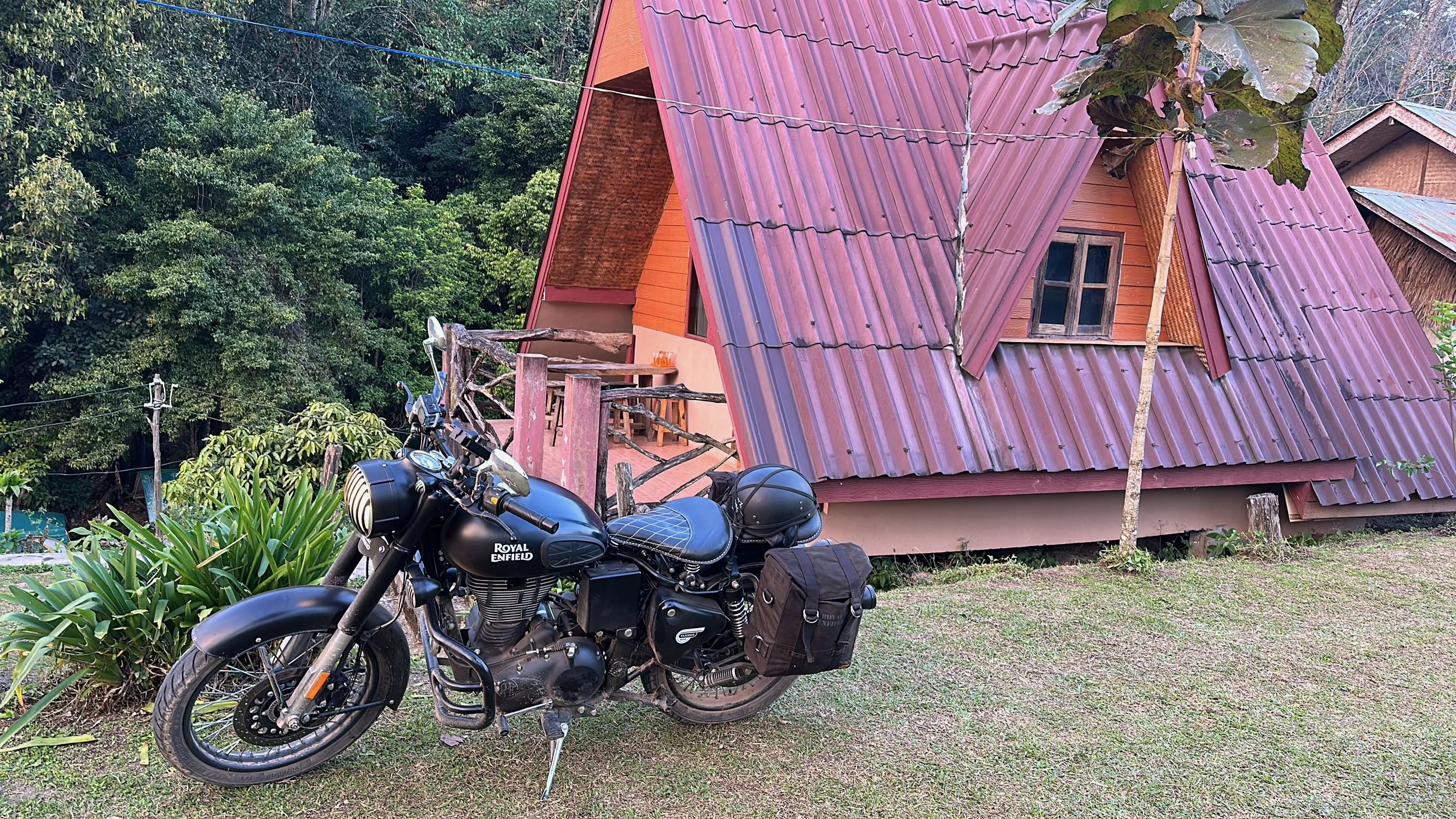
My arrival there was purely by chance and was, I felt, a ringing endorsement of my new policy of traveling with no reservations. Admittedly I’d adopted this modus operandi by necessity rather than choice, having repeatedly postponed my festive season travel planning until the season itself had already arrived. With all airline and bus seats full, my only option for escape from Bangkok had been to leave under my own steam. So I’d strapped my bags onto the back of my motorcycle and hit the highway out of the city with only the distinctly vague “northern Thailand” as my destination and not a hotel booking to my name. But at least I’d saved myself countless hours that I’d normally have been spent weighing up alternative itineraries and getting bogged down in endless reviews.

A couple of days’ riding later, somewhere north of Chiang Mai, the name “Pai” on a road sign up ahead rang a bell. I vaguely remembered reading about a remote tropical hilltop Shangri La in an old magazine and so resolved to spend a few nights there. No doubt it was once exactly that - right before people started writing about it that is. What I rode into half an hour later was instead a buzzing hive of tourists, packed with bubble-tea shops and hipster cafes touting the "Pai High", courtesy of Thailand's recent relaxation of restrictions on cannabis use. Its teeming streets were exactly the opposite of what I was looking for but, thankfully, having no reservations to honour, I was free to just gun the throttle and continue on thorough and out the other side.
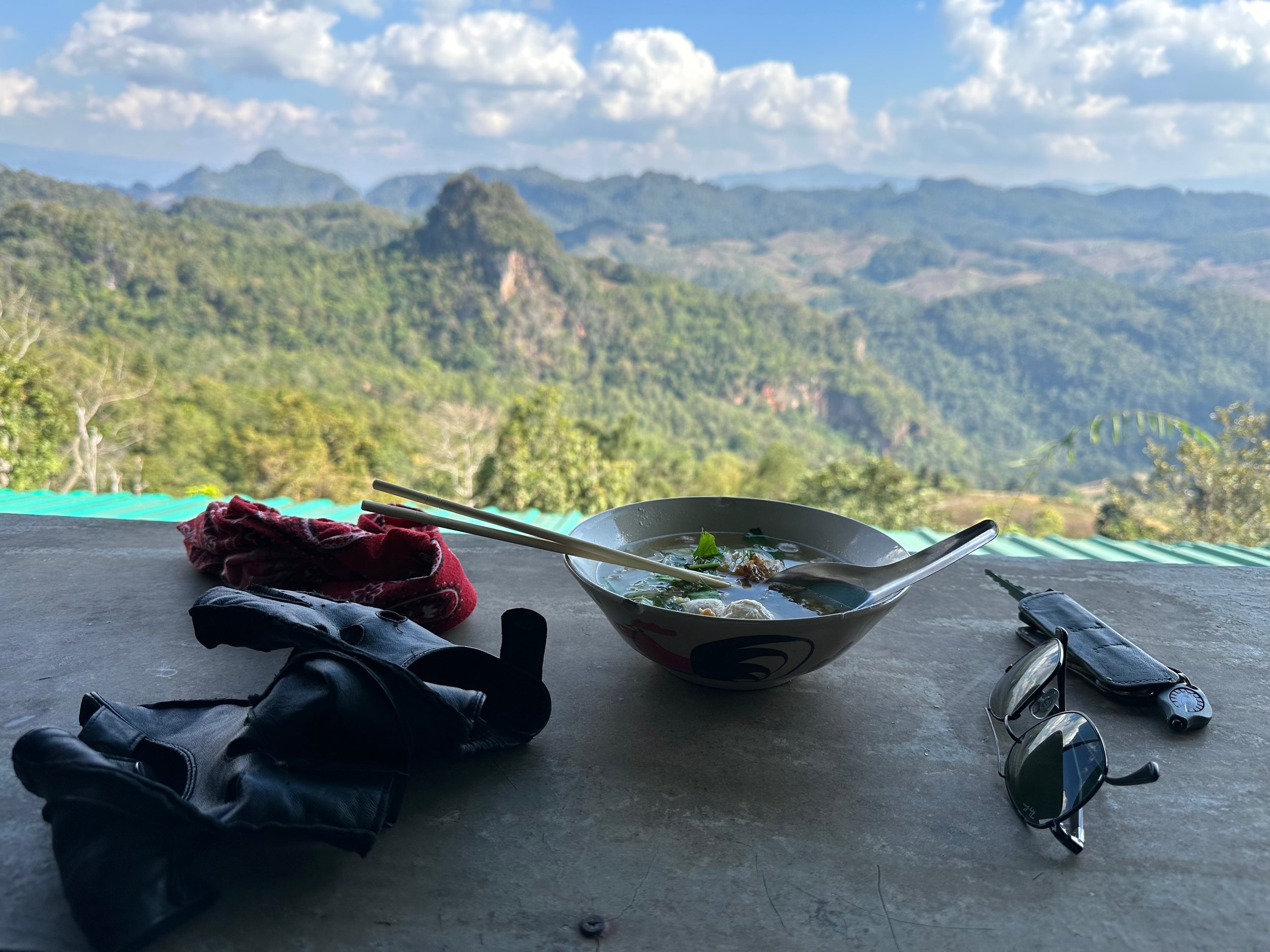
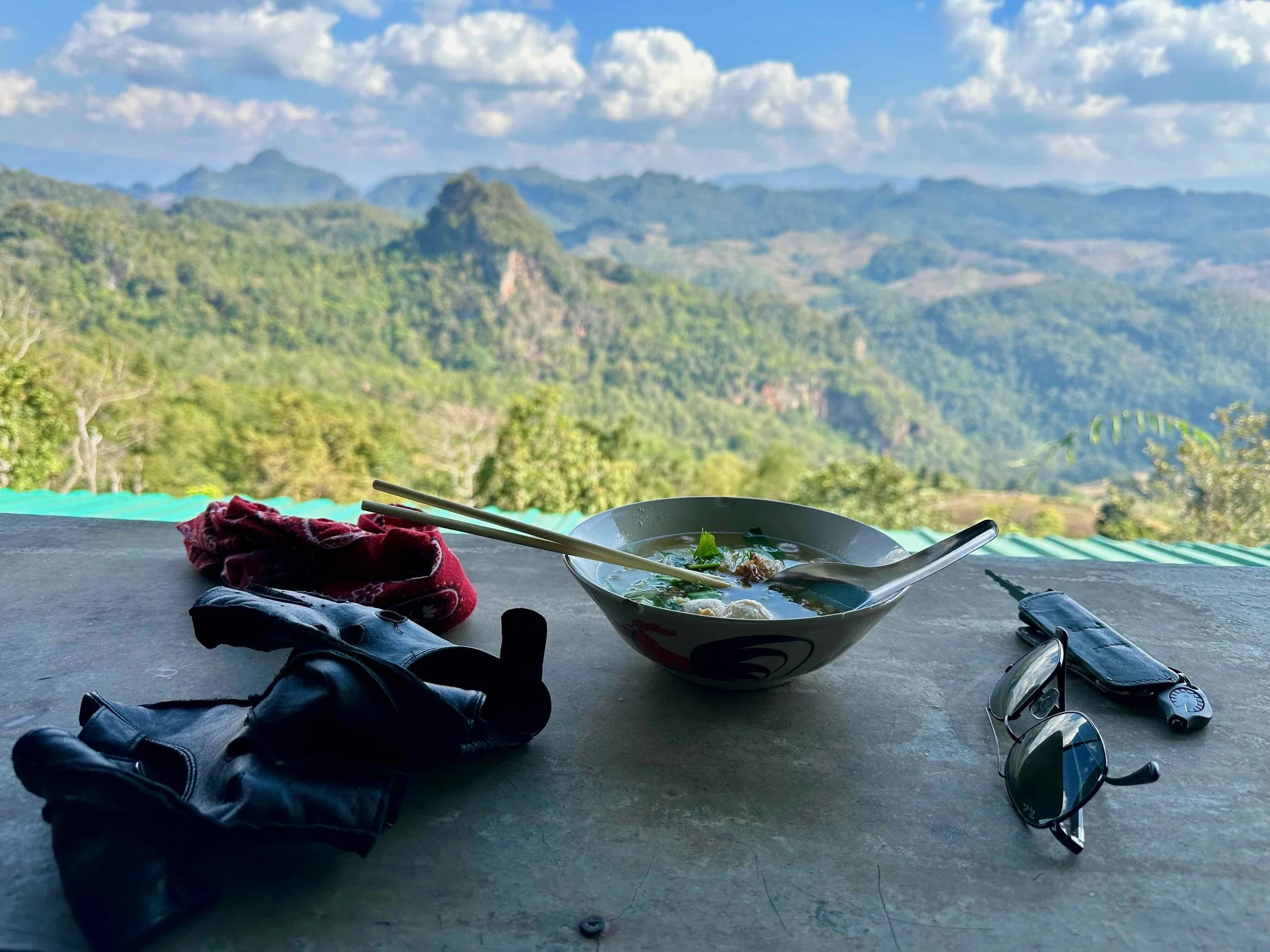
I resolved to now just take the smallest, most scenic-looking roads I could find in the hope of ending up somewhere interesting that no other foreigner had heard of. I motored on through hills, forests and rice paddies until the road petered out at the Burmese border just before sunset and presented me with exactly what I’d been looking for: the glorious enigma that is Baan Rak Thai, a place I never would have found in any guidebook.
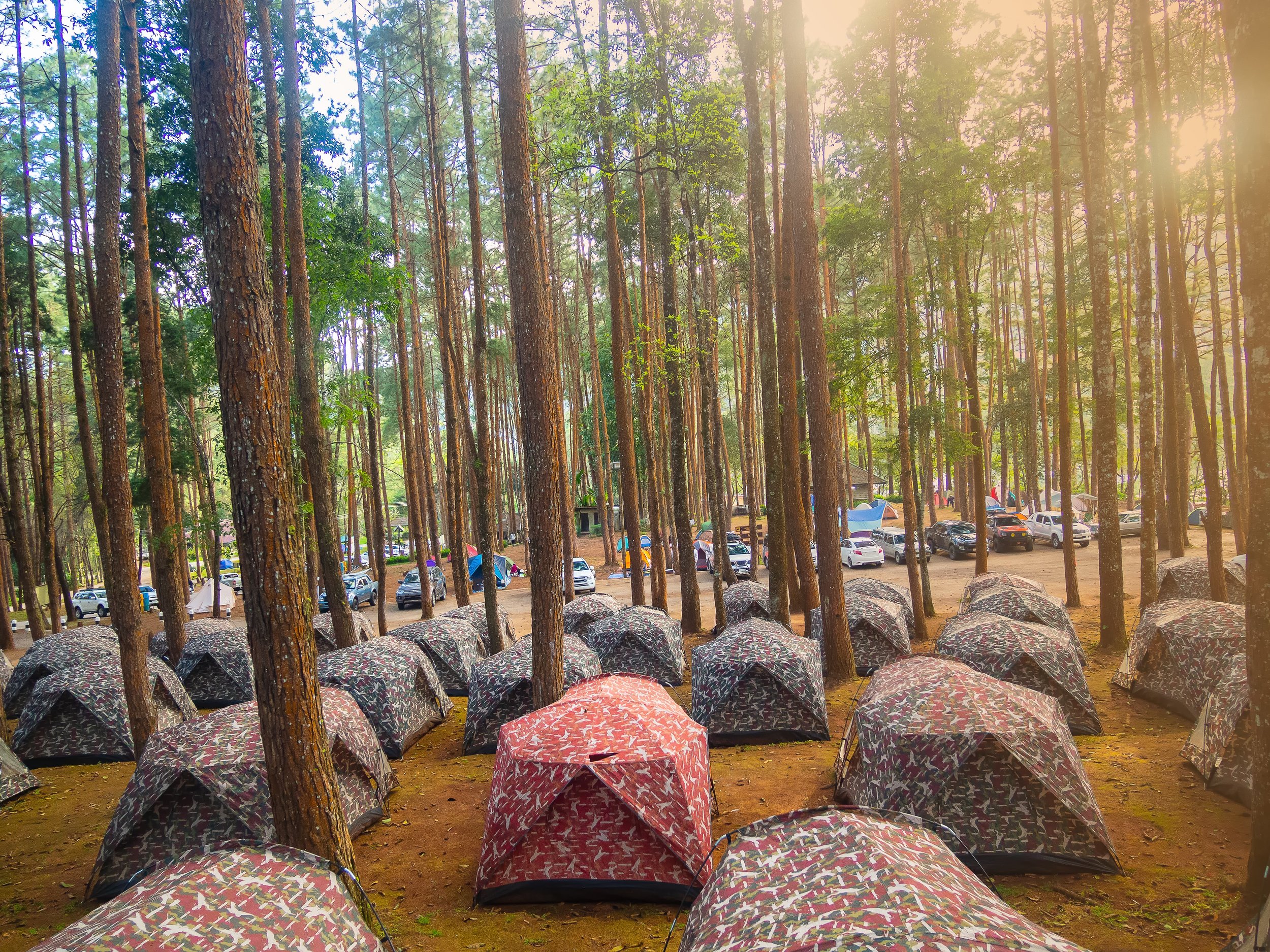
After a couple of days there, I continued on and found myself near a national park and was drawn in by its promise of peace, quiet, and fresh mountain air. As I followed the narrow road into it however, I found that most of the rest of Thailand had also had the same idea. Every camping spot was jam-packed with tents pitched guy rope to guy rope, new neighbours sharing snacks or engaging in an impromptu game of badminton. This clearly violated the sacred sacrificial pact of camping as far as I was concerned, whereby one gives up essentials like running water and a comfy bed in return for peace, solitude, and absolutely zero risk of group activities.
I decided to set out early the next morning to ensure that I finally got some alone time watching the sun rise from the highest peak in the park (and indeed the whole of Thailand), Doi Ithanon. I should note at this point that its summit soars to only 2,500 metres, rendering it somewhat modest by conventional mountaineering standards, and that there is also a road going all the way up to the top. Nevertheless, I was still feeling quite adventurous as I loaded my bike up in the dark at 4am. Snaking upwards through the jungle, I caught glimpses of a couple of red lights through the trees ahead, no doubt a temple or a ranger station. But as I rounded the next corner, I found myself instead at the end of a huge traffic jam, tail lights twinkling like misplaced Christmas baubles all the way up the mountain.
I weaved my way through the traffic, cursing as I did so, and arrived at the top half an hour later, shivering in now overly fresh mountain air. But I was still determined to find a peaceful spot to watch the break of dawn and found a promising little path that looked like it would lead to a good vantage point. As the first light started to penetrate the morning mist, I also heard a waterfall up ahead - things were looking up. But once again my senses had deceived me as the mist revealed itself to be cooking smoke and that falling water was actually the sound of sizzling. My quaint little path led not to a secluded vantage point, but instead to a clearing where a couple of dozen improvised food stalls had been set up by enterprising locals. They were now merrily hawking an eclectic assortment of Thai treats to my hungry fellow pilgrims, from pork belly stew to curried fish custard.
I was standing shivering, out of ideas and almost of curses, when I heard someone calling out to me. I turned round to refuse whatever delicacy they were proffering but found a portly middle-aged woman waving me over from behind her charcoal grill, miming that I should come to warm my shaking hands over it. Despite the cold, I could feel my heart already beginning to melt at her thoughtfulness. My new friend had an infectious laugh as she helped me toast my palms and I repaid her by helping to cajole potential customers to eat at her stall. I got chatting with a few of them and it was remarkable what fine spirits everyone was in despite the foul weather and near-zero visibility meaning we’d all schlepped up there in vain. People were joking about our common predicament as they snacked and chatted, enjoying the rare experience of actually feeling cold in Thailand. A decent percentage of them had decided to celebrate this rare occasion by dressing up in furry animal "onesies" - I spotted cats, dogs, pandas, crocodiles, and even a unicorn. As the only foreigner up there, I was requested to guest star in quite a number of group selfies and had soon forgotten about the amazing view and glorious solitude that I'd been anticipating and instead found myself reveling in the joys of the kind of group activities I normally recoiled at.

That’s not to say there weren’t also downsides to my complete lack of planning for this trip. For example, trying to find a hotel room on Christmas Day, I finished up billeted in what looked suspiciously like a storeroom. Then a foray down a side road in search of some photogenic Shan villages turned into a six-hour odyssey as the road morphed into a dried-up riverbed and got me lost deep in the jungle, needing some jovial local hunters to finally put me back on the right track.
But as I dropped off my bike in Chiang Mai to be trucked home at the end of my adventures and boarded the sleeper train back to Bangkok, I realised that the upsides of no reservations still far outweighed the downsides. The real unspoiled gems were not going to jump out of Google or the guidebook, no, they had to be discovered through serendipity. And my preconceptions about places, and even my own preferences, had proved wholly unreliable, which again meant having to go see for myself if something was really my cup of tea. The beauty of no reservations was that, if it was, then I was free to stay as long as I fancied and if it wasn’t, well, I could just move on straight away, no harm done. No reservations also meant much more time spent doing instead of planning and that I avoided the tendency of spending my time on the road mostly in anticipation of the next thing coming up on my list. Instead I stayed much more in the present moment, appreciating the here and now.

As I walked down the line of bunks in the train carriage, I concluded that Thailand really is quite the perfect place for no-reservations travel, given of its inherent flexibility and sociability. As I arrived at my berth, I was greeted by a smiling Thai couple billeted next to me. I climbed in and snuggled down to watch the world glide by outside my window. As a hand appeared through my curtain proffering a piece of dried mango, I realised that I might even come round to the idea of communal camping too.